You can rank higher online by 2026 through a semantic SEO strategy overview. Google now understands what text means beyond simply its keywords, with semantic SEO looking into intent-driven searches and issue depth before ranking content. Semantic SEO represents something new in SEO that allows websites to quickly rank for more keywords.
Moreover, it makes websites more authoritative, increases organic traffic, enhances user experiences, and gets conversions faster. There are several semantic SEO elements, such as schema markup, internal linking, and content organization. In this guide, we will explain how semantic search SEO could benefit your website rankings, as well as its advantages, essential tactics, E-E-A-T, and future challenges it will encounter.
What is Semantic SEO?
Semantic search SEO refers to optimizing content to meet the meaning, context, and intent behind search inquiries rather than matching specific keywords directly. Search engines utilize this technique to understand keywords vs topics, and entities relate, so they can deliver more accurate search results for you. The process uses semantic SEO markup to develop engaging content for the audience and answer their inquiries while building up authority in your business niche. This shows the importance of semantic seo in keywords becomes clear.
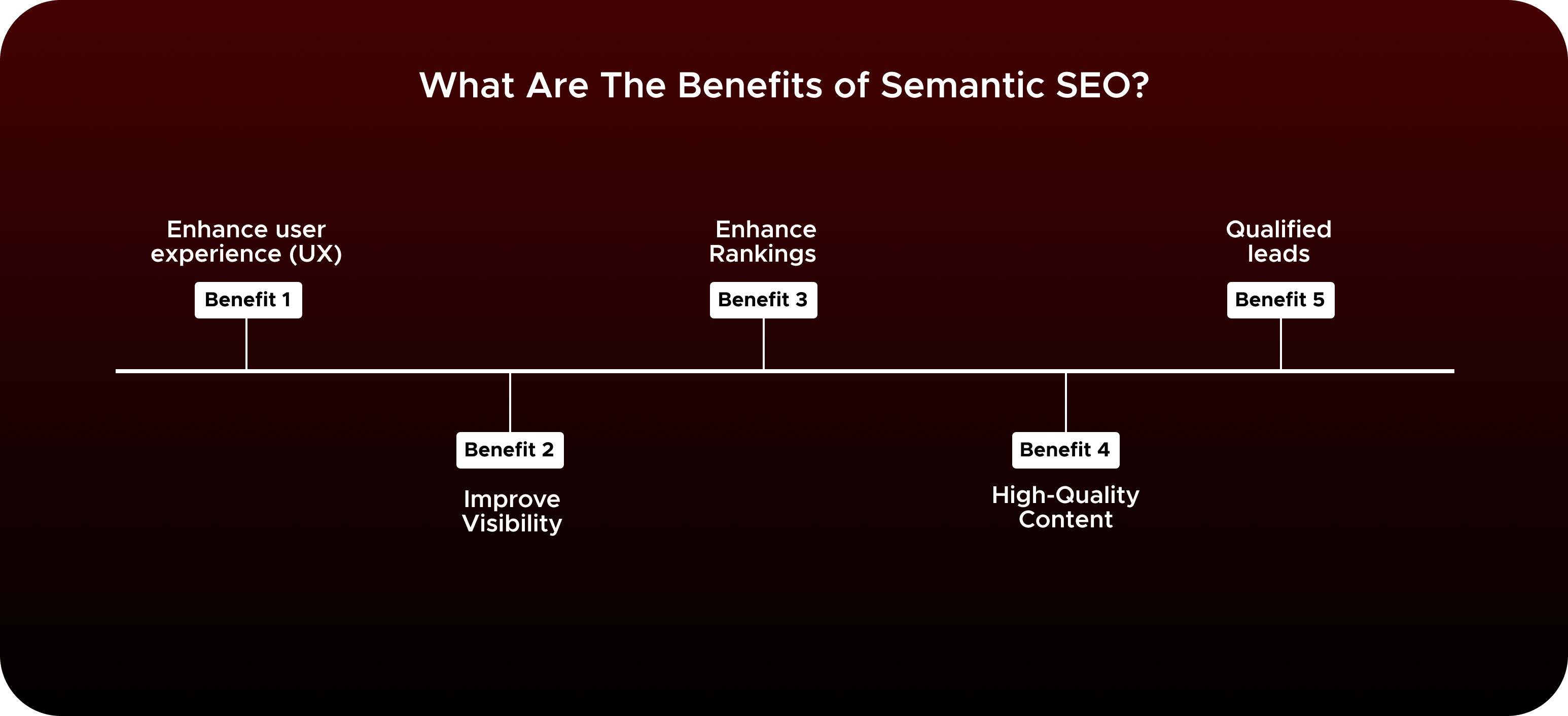
What Are The Benefits of Semantic SEO?
A best semantic seo writer can guarantee that your content targets semantic keywords and aligns with Google semantic search SEO.
1. Enhance user experience (UX)
Semantic SEO ensures your content is comprehensive, relevant, and directly addresses user inquiries for an unwavering and fulfilling user experience.
2. Improve Visibility
It appears your content-rich results, featured snippets, and knowledge panels are for increased exposure and an edge in terms of visibility and rankings.
3. Enhance Rankings
Semantic search SEO aligns perfectly with Google’s focus on user intent and producing quality content, helping you achieve higher rankings over time.
4. High-Quality Content
It encourages producing in-depth, meaningful articles that offer genuine benefit to your target audience and offer true meaning to searchers.
5. Qualified leads
This technique provides you with qualified leads by targeting intent-driven queries to draw in those truly searching for products or services like yours, leading to higher conversion rates.
How Semantic Search Works?
Semantic search works in the following ways. This includes searching in the coming web content to match keywords and understand user intent.
1. Know What the User Wants
Search engines look at more than just the words people put in to figure out what they truly want. For instance, if someone searches for digital marketing services, they could easily compare features, costs, or reviews.
2. Analyze Context
Search engines look into the context of the search, such as where you are, what you have searched for before, and similar words, to provide you with more relevant results.
3. The Knowledge Graph
Google’s knowledge graph links people, places, and things to give you better, more accurate results. For instance, if you search for SEO, you can find other information related to this service.
4. Recognizing Entities
Search engines find and interpret elements in your content, such as brands, goods, or places, to better match user searches.
5. AI and Machine Learning
Search engines can better match information with what users want because of advanced algorithms like Google’s BERT and MUM, which help them understand the subtleties of language and context.
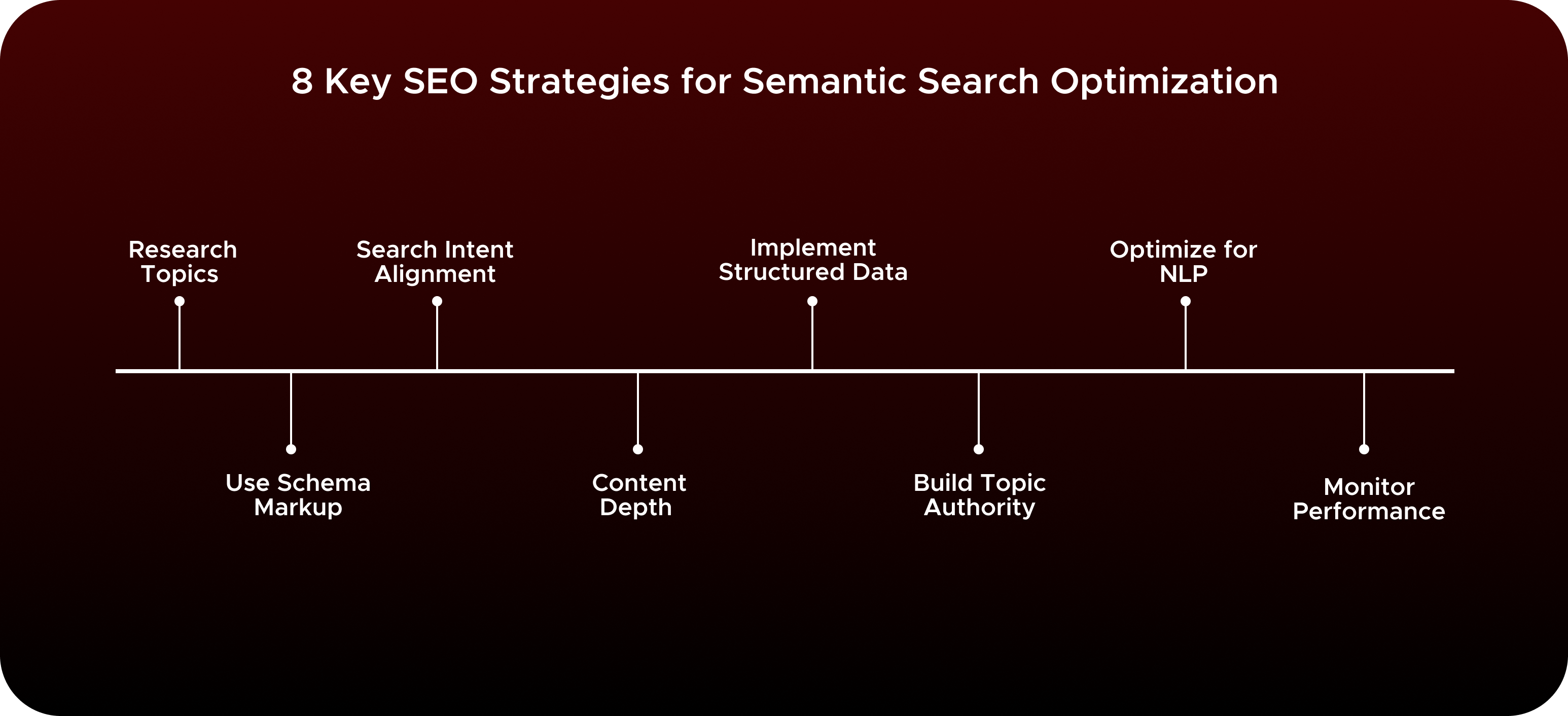
8 Key SEO Strategies for Semantic Search Optimization
The goal of semantic search SEO is to help search engines figure out what words mean, how they relate to one another, and what the user wants. These tips will help your website rank higher, get greater traffic, and stay up to current with algorithm changes.
1. Research Topics, Not Just Keywords
Traditional SEO looks at single keywords, whereas semantic SEO looks at concepts, which are:
- Main pillar themes
- Subtopics: Related Questions
- Synonyms with different meanings
- Things that are related to the subject
It is important because Google utilizes natural language processing (NLP) to figure out what people mean when they search for something. If your website solely focuses on services, you won’t show up for a lot of related searches.
You can do this by:
- Making groups of topics
- Find People to also ask questions
- Make pillar pages that link all of the subtopics together
- Group search phrases by what they signify, not by how closely they match
After the procedure, your website will rank for more variants, longer phrases, and terms that are more semantically relevant.
2. Use Schema Markup
Schema markup is a way to write that informs Google precisely what your page is about. For instance:
- Blog Schema
- FAQ Schema
- Service Schema
- Schema for Products
- Schema for Local Businesses
- How-To Schema
It is important because Google gives websites with the right schema-rich results, such as FAQ dropdowns, stars, prices, and breadcrumbs.
All of these will help you in:
- More clicks
- More visible
- Better at recognizing entities
- Better grasp of meaning
3. Search Intent Alignment
The reason a person types anything into a search engine is called their search intent. Even if your content is properly optimized, it will not work if it does not fit the right aim.
When making content for your company website or beginning semantic SEO, you should follow these four sorts of intent:
You can do this by:
- Finding out what Google wants, look at SERP analysis.
- Matching the kind of content (blog, landing page, comparison).
- Answering the main and secondary questions that users have.
Google will give your website a higher rank once you complete the steps, since it is beneficial for the user.
4. Content Depth and Expertise
Semantic SEO promotes thorough material, written by an expert, and well-organized. This includes:
- Adding expert opinions (Stats)
- Looking at all sides of a subject
- Giving examples, statistics, and pictures
- Answering questions that are similar to each other naturally
- Using things and words that mean something
It matters because Google likes websites that have a lot of topical authority and E-E-A-T (Experience, Expertise, Authoritativeness, Trustworthiness).
You can get depth by:
- Using long-form material when it’s needed
- Include FAQs, case studies, and comparisons
- Topic clusters may help with content
This way, you can rank your content on the SERP first pages.
5. Implement Structured Data
Schema markup is only one part of structured data. It creates a map that machines can read that shows how things are related to each other:
- Entities
- Subjects
- Services
- Categories
- Locations
This helps Google Knowledge Graph figure out:
- Who you are
- What do you have to give
- How pages link to each other
- Why your page is important
For instance:
- Data for Local Business
- Connections between products and services
- Organization markup and breadcrumb structured data
In the end, it helps Google understand your brand and websites better, which leads to improved rankings and stability.
6. Build Topic Authority Through Internal Linking
Internal linking is one of the most important indications for semantic SEO. So, your internal connections should:
- Link related blogs and service pages
- Make a semantic pathway for crawlers
- Make it easier to find your way around and utilize
- Use descriptive anchor language to help the cluster pillar
It matters because Google follows internal links to understand:
- Topic depth
- Content relationships
- Page importance (authority distribution)
For this, you have to make sure:
- Use natural anchor text, not exact-match spam
- Every topic cluster should link back to its pillar page
Likewise, your website becomes easier for Google to crawl, understand, and reward.
7. Optimize for NLP and Voice Search
People do not write in short keywords anymore. Instead, they search and talk in whole phrases. People could seek in the form of extended questions at times. This is why Semantic SEO needs natural language processing material that sounds like a normal discussion.
You can make it better by:
- Targeted snippets
- Answer questions right away
- Add long tail keywords in the content
- Use language that sounds like a conversation
- Add sections for frequently asked questions
It matters because voice search, AI-driven search, and conversational search engines all prefer material that sounds like natural English.
8. Monitor Performance Beyond Rankings
Finally, with semantic SEO, rankings don’t really represent how well anything is doing. You still need to check KPIs regularly:
- Rate of clicks
- Loading Page time
- Rate of engagement
- Flow of internal links
- How far down you scroll
- Strength of topic clusters
- The displayed excerpt shows
- Growth of semantic keywords
- Recognizing entities with the Google NLP API
It matters because semantic search is not just about how well one keyword does. Instead, it’s about how well a subject does overall. You should keep an eye on these numbers to figure out:
- Where people leave
- What subjects require additional depth
- What Google thinks about your entities
- Which cluster pages need additional links?
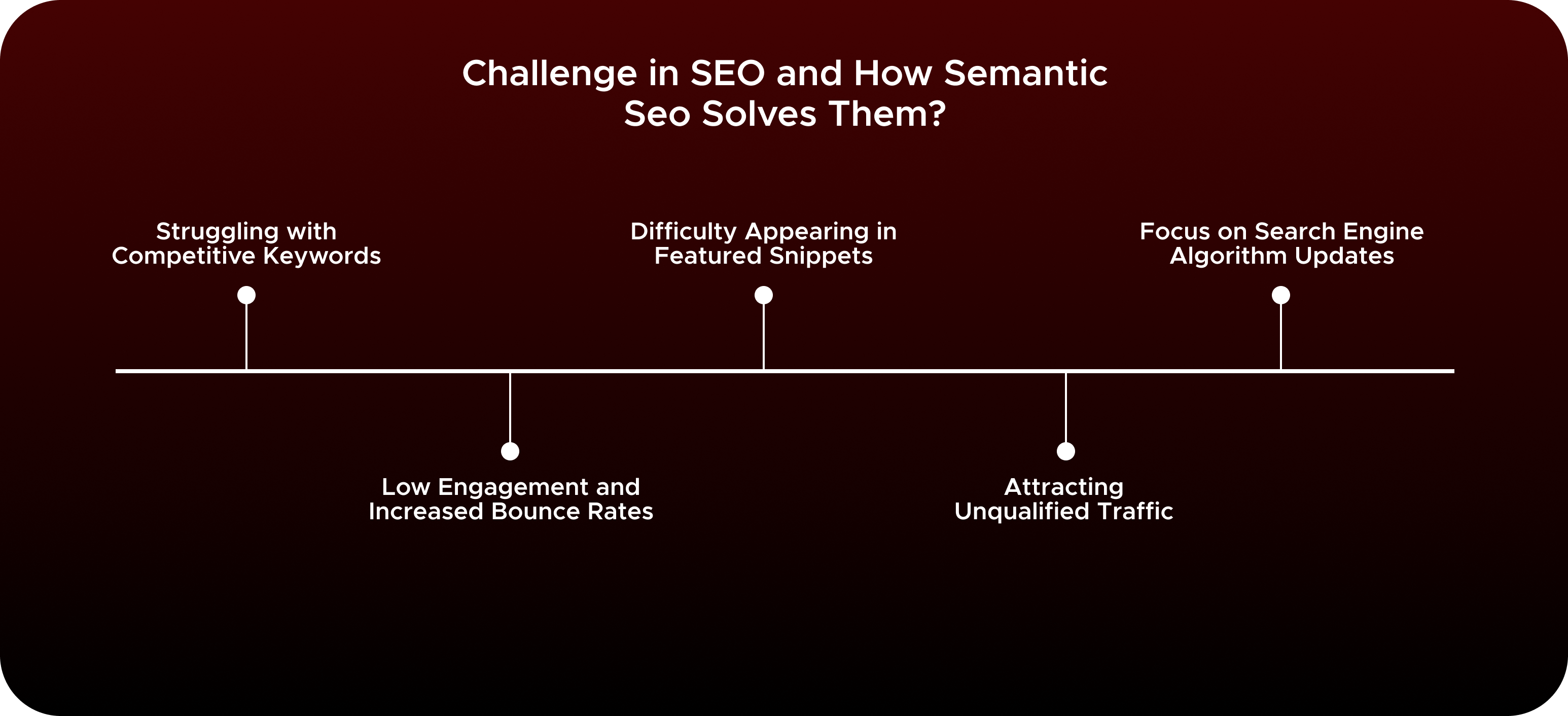
Challenge in SEO and How Semantic SEO Solves Them?
1. Struggling with Competitive Keywords
Firstly, businesses often target high-volume keywords only to be overshadowed by larger competitors, yet semantic search SEO allows you to take a different approach, targeting less competitive, intent-driven queries.
2. Low Engagement and Increased Bounce Rates
Secondly, users often leave your website quickly when its content doesn’t adequately satisfy their needs or is difficult to navigate, leading to high bounce rates and user churn. Semantic SEO emphasizes creating user-centric, easy-to-read articles that answer user inquiries comprehensively while remaining engaging, thus keeping readers on the page longer while decreasing bounce rates.
3. Difficulty Appearing in Featured Snippets
Next, your content may not be optimized to deliver optimal search results, and you might lose out on prime real estate in search results. But using structured data and schema markup can increase your odds of appearing in featured snippets, FAQs, or any other enhancements available through semantic SEO.
4. Attracting Unqualified Traffic
Moreover, your website attracts visitors, but they aren’t qualified leads – meaning visitors don’t convert. Semantic SEO targets intent, making sure users interested in what your offerings have to offer come your way, will draw in users searching for DIY solutions or professional plumbing services.
5. Focus on Search Engine Algorithm Updates
Additionally, frequent algorithm changes make ranking updates challenging to keep up with, yet Semantic SEO provides the solution by producing high-quality user content that aligns with Google’s long-term goals while lessening any impact of algorithm changes.
Conclusion
In short, if you are having difficulty ranking for high-volume keywords, semantic search SEO will help you out there. You should target broad topics and long-tail keywords to increase engagement rates and reduce bounce rates. How? By creating user-focused content that addresses questions comprehensively while remaining easily readable. Semantic SEO can improve low engagement rates while keeping readers engaged for longer and reducing bounce rates.
It also addresses any difficulties you are having appearing in featured snippets. All by applying data and schema markup, increasing your chances of showing up in featured snippets or FAQ pages on websites. Furthermore, the newest technique will also help in targeting consumer intent to bring more leads through. Since Google algorithms change regularly. Pixako.ae is the best semantic SEO consultants who focus on producing high-quality content that aligns your website with Google over the long term.
Frequently Asked Questions
What is semantic seo and why does it matter?
Semantic SEO improves content so search engines can understand it. More than keywords, it considers user intent and word relationships. This method is crucial because it makes searches more visible and relevant, meeting consumer needs.
How has semantic search changed SEO?
Semantic search has shifted SEO from keywords to context. Search engines now prioritize user needs and search patterns. This shift forces content authors to focus on providing consumers with useful, relevant information to answer their questions.
What are the benefits of semantic search?
Semantic search provides more relevant and accurate results, improving user experience. It helps search engines connect ideas and provide more relevant results. This may boost organic traffic, interaction, and rankings for high-quality content.
Does ChatGPT use semantic search?
ChatGPT’s semantic search is different. Instead, it answers using language and context patterns. However, the model uses contextually relevant information to answer clearly. This helps it answer semantically aware user questions.
How does semantic search impact SEO?
SEO is impacted by semantic search rankings, which consider context, user intent, and content relevance. Marketers must provide customers with useful information that answers their questions, not just keywords. Semantic SEO boosts website traffic and rankings.
Like what you see? Share with a friend.